Is “executive” in Green Bay just a price tag, or something more? If you’ve looked at riverfront listings, new custom builds, or larger-lot homes around Brown County, you’ve seen how varied this segment can be. You want clarity on what truly counts, how the market behaves, and how to position your next move with confidence. In this guide, you’ll learn how “executive” is defined locally, which pockets tend to host these homes, and the strategies that help buyers and sellers succeed in this tier. Let’s dive in.
What “executive” means in Green Bay
When you hear “executive home” in Brown County, it usually means one of three things:
- Percentile approach: Homes in the top 10 percent by sale price in the local market over the past 12 months. This is the most defensible method because it adjusts with the market.
- Multiplier approach: Homes priced around 1.5 to 2.5 times the local median sale price.
- Feature-based approach: Homes with larger square footage, premium lots like waterfront or acreage, high-end finishes, multi-car garages, and multiple living spaces.
The cleanest way to define this tier is the percentile approach. To calculate it, you or your agent pull the last 12 months of closed sales from the local MLS, compute the 90th percentile sale price, and note how much of today’s inventory sits above that level. You can cross-check broad market context in the Wisconsin Realtors Association research hub, then dial in thresholds with MLS data.
How the executive segment behaves
Upper-tier homes in Green Bay and Brown County follow a few consistent patterns:
- Inventory is thinner and volumes are smaller, so month-to-month stats can swing more than the overall market.
- Demand ties closely to local high-income households, professional relocations, and downsizers. Corporate moves and confidence can shift the pace.
- Pricing sometimes leads or lags broader trends. Wealth and rate sensitivity can cause timing differences versus entry-level segments.
Mortgage rates and move-up decisions
Higher rates reduce borrowing power and can slow some move-up plans. Many buyers in this tier juggle timing between selling a current home, arranging bridge financing, or using cash plus a post-close refinance. For a current view of rate trends, check the Freddie Mac Primary Mortgage Market Survey.
Seasonality matters
Spring and summer typically bring more showings and stronger pricing conditions for upper-tier listings. Fall and winter can be quieter but often bring focused, serious buyers. If you need to sell in an off-peak window, presentation and precise pricing become even more important to overcome seasonal headwinds.
Where buyers come from
Most buyers are local, but relocations can punch above their weight in the executive tier. Keeping an eye on business expansions and corporate headlines helps you read demand. The Green Bay Press-Gazette business section is useful for staying current on regional job news that can influence higher-end housing.
Price bands and product styles
Because the market moves, it’s smarter to explain the method than to quote stale numbers. In practice, you determine the executive threshold by computing the 90th percentile sale price from the last 12 months of MLS data, then compare it against a simple rule-of-thumb like 1.5 to 2.0 times the current median. For context and trends, you can also review state-level insights from the WRA’s market reports.
What these homes often include
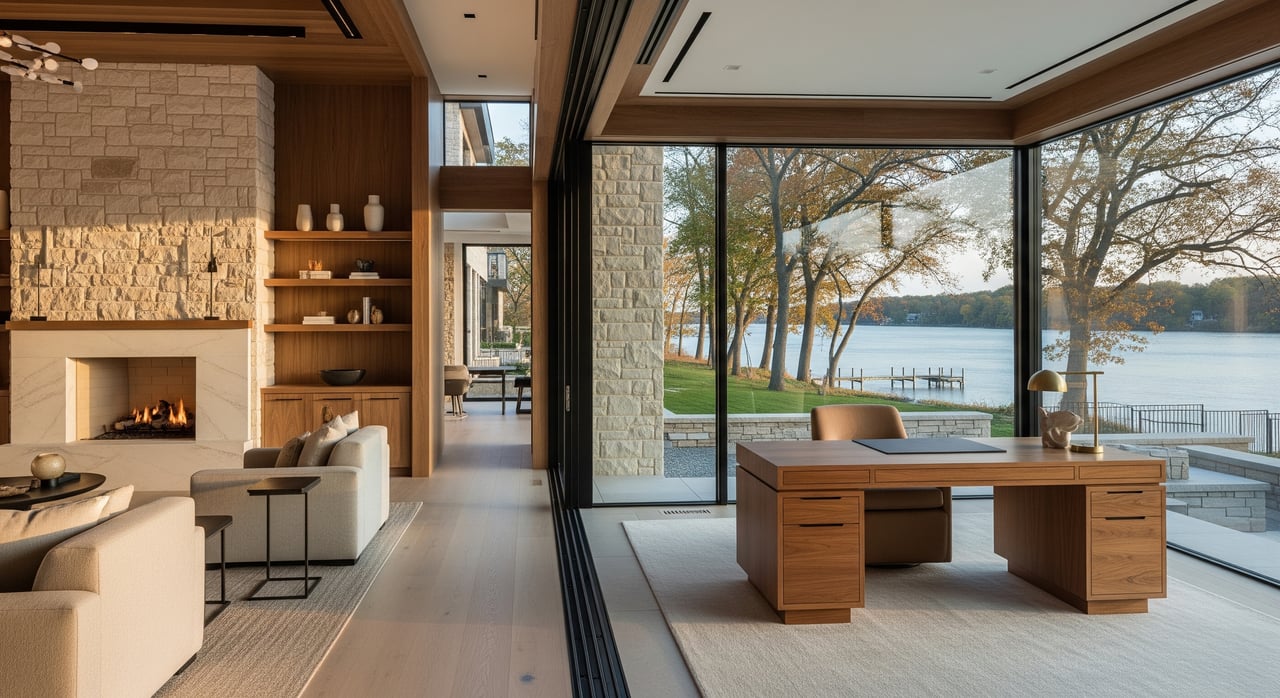
- Lot and location: Waterfront along the Fox River or the Bay of Green Bay, larger suburban lots or acreage, and convenient access to schools, golf, and club amenities.
- Size and layout: Roughly 2,500 to 4,500-plus square feet for many owner-occupied homes in this tier, multiple living spaces, higher bedroom and bath counts, finished basements, and dedicated offices.
- Finishes and systems: Upscale kitchens with stone counters and premium appliances, luxury baths, upgraded mechanicals, 3-plus car garages, outdoor living areas, and smart-home features.
- Age mix: A blend of character homes from the early 20th century in established neighborhoods and newer custom builds that favor open plans and modern design.
Common architectural styles
You’ll see early 1900s Colonial Revival and Tudor Revival homes in older neighborhoods, Craftsman and bungalow variations, mid-century and ranch homes from 1950s to 1970s development, and newer contemporary or traditional builds in suburban subdivisions.
Neighborhoods and pockets to watch
Executive inventory appears across the city and nearby municipalities. Within Green Bay, look for established residential areas with larger lots and historic homes, plus select riverfront corridors. Outside the city, several Brown County communities often feature upper-tier options:
- De Pere
- Allouez
- Ashwaubenon
- Suamico
- Howard
- Bellevue
Waterfront properties along the Fox River and the bay typically command premiums because of lot scarcity, views, and recreational access. If you’re scouting neighborhoods, MLS neighborhood names will help you filter results, and parcel-level history is available through the Brown County Register of Deeds.
Selling an executive home: playbook that works
Presentation and precision drive outcomes at the top of the market. Buyers are paying for lifestyle and emotional value, so the small things carry weight.
- Pre-listing inspection: Identify and address issues upfront. Sharing reports can reduce renegotiations.
- High-ROI updates: Focus on kitchen and bath refreshes, mechanical tune-ups, and curb appeal or landscaping.
- Staging and prep: Professional staging and thoughtful decluttering help buyers visualize daily living and entertainment zones.
- Premium visuals: Use high-end photography, twilight shots for waterfronts, drone imagery for larger lots, and a 3D tour to widen the buyer pool.
- Storytelling: Highlight lifestyle assets like privacy, river or trail access, low-traffic streets, and nearby recreation.
- Showings strategy: Use targeted broker opens and private tours to balance exposure with convenience.
- Smart pricing: Anchor to recent comparable sales in the executive tier. Consider staged price steps in thin-inventory environments and avoid overpricing that leads to stale days on market.
If you want execution that matches the tier, our team’s standard listing package includes professional photography, complimentary staging, and printed property booklets that elevate perception and support premium pricing. We combine this presentation-first approach with a data-informed plan for timing, pricing, and negotiation.
Buying an executive home: how to win
Buying in the top tier requires preparation and a clear strategy.
- Financing first: Get fully pre-approved. Learn whether you’ll use conforming or jumbo financing and how appraisals are handled in higher price bands. The National Association of Realtors research library is helpful for broader buyer and seller behavior insights.
- Plan the sale of your current home: If you need to sell to buy, explore contingencies or bridge financing options and map out timing.
- Inspect the big systems: Larger homes can have higher replacement costs. Pay close attention to roof, HVAC, septic or sewer, and foundation.
- Negotiate for fit, not just price: In this tier, timing, possession, and inclusion of select fixtures or equipment can matter as much as dollars.
- Expect measured timelines: Upper-tier inventory can move slower than the overall market. The right home is worth patience.
Data sources you can trust
You deserve reliable, local data behind every decision. These sources help you verify trends and numbers:
- Local MLS via a cooperating Brown County agent for percentiles, DOM, list-to-sale ratios, and comps.
- Wisconsin Realtors Association for monthly and quarterly market context.
- National Association of Realtors research for national trends and buyer-seller behavior.
- Freddie Mac PMMS for mortgage rate trends that influence affordability and timing.
- Brown County Register of Deeds for official transaction records.
- Green Bay Press-Gazette business news for local corporate developments that can affect higher-end demand.
Next steps
If you’re considering buying or selling in Green Bay’s executive segment, the right plan blends precise pricing, elevated presentation, and proactive negotiation. Our boutique, team-based approach is designed for this tier. We pair concierge-level listing execution with dedicated buyer advocacy so you move with clarity and confidence.
Ready to talk strategy, timing, and value for your home or search? Connect with the Sandra Ranck Real Estate Collective eXp Luxury to request a complimentary valuation or schedule a private consultation.
FAQs
What price defines an executive home in Green Bay?
- It is typically the top 10 percent of recent sale prices in Brown County. Your agent should calculate the 90th percentile from the last 12 months of MLS data to set today’s threshold.
How long do executive homes take to sell in Brown County?
- Upper-tier listings often see longer days on market than the overall market due to lower inventory and a smaller buyer pool. Season and presentation can shift timelines.
Which Brown County areas often have executive inventory?
- You will commonly find options in De Pere, Allouez, Ashwaubenon, Suamico, Howard, and Bellevue, plus riverfront and bayfront locations. Verify availability through the local MLS.
What upgrades deliver the best ROI before listing?
- Target kitchen and bath refreshes, mechanical updates, and curb appeal. Add professional staging and premium photography to strengthen perceived value.
Are mortgage rates affecting upper-tier buyers right now?
- Yes. Buyers in this tier can be rate and wealth sensitive. Bridge financing and careful timing help, and you can track trends in the Freddie Mac PMMS.