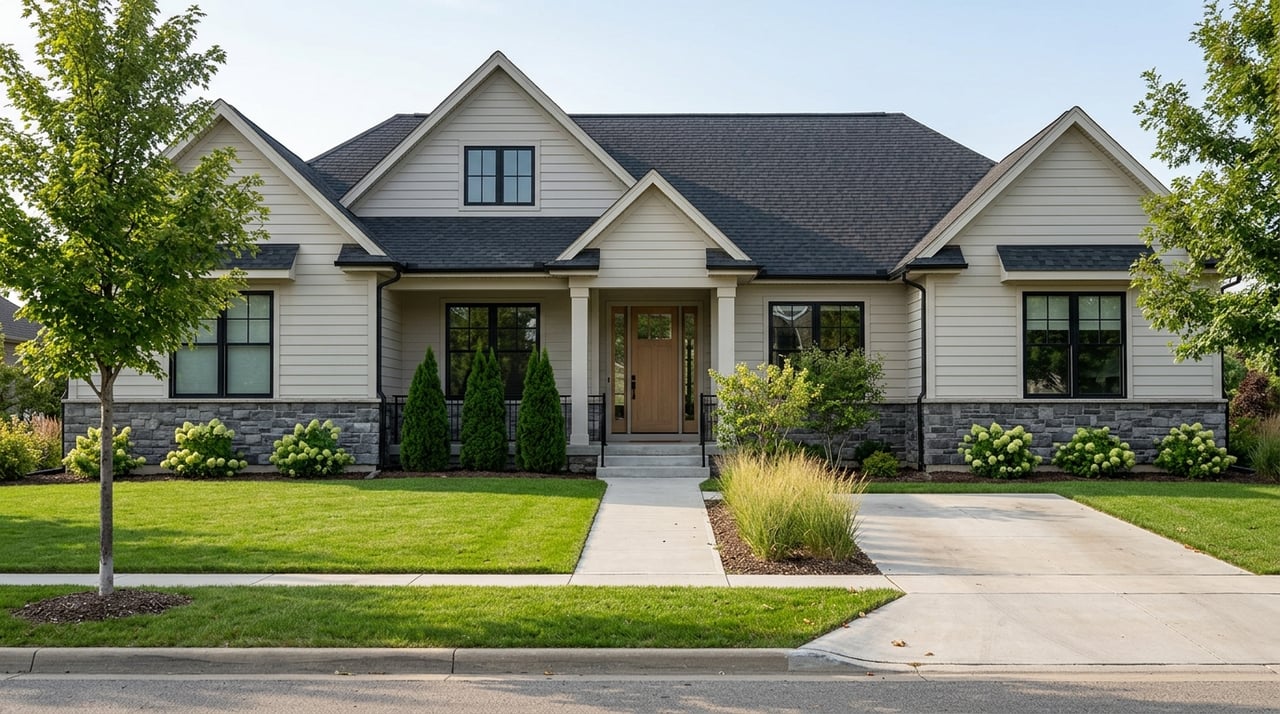
If you’re moving up in Howard, you’re not just shopping for more square footage. You’re choosing how you want to live, how much land you want to maintain, and what kind of setting will feel right for your next chapter. In Howard’s executive segment, those tradeoffs matter more than many buyers expect, and understanding them can help you make a sharper, more confident move. Let’s dive in.
What “executive” means in Howard
In Howard, executive neighborhoods are not all built the same. Some lean toward wooded settings and larger lots, while others focus on newer ranch homes with polished finishes or low-maintenance living near community amenities.
That distinction matters because Howard’s development pattern helps shape the feel of each neighborhood. The village’s R-1 minimum lot standard is 10,800 square feet with an 80-foot lot width, while R-5 rural-estate zoning reaches 1.5 acres. A village housing report also notes a typical lot size of about 90 by 135 feet, which helps explain why lot size, privacy, and upkeep often carry as much weight as the home itself.
Why move-up buyers choose Howard
Howard offers a suburban setting with a strong mix of amenities and newer housing options. For many move-up buyers, that means you can target the lifestyle you want without leaving Brown County.
The village also has a well-established community infrastructure. Howard Commons includes an open-air pavilion, indoor activity center, multi-season skating rink, amphitheater, Biergarten, and splash pad. Duck Creek Quarry Park adds trails, a dock, and swim access, giving buyers another lifestyle element to consider beyond the property line.
School access is another practical factor for many households comparing neighborhoods. The Howard-Suamico School District serves 5,550 students across eight schools and 58 square miles, which makes commute patterns and day-to-day convenience part of the buying conversation.
Howard market conditions right now
Howard appears active, but not frenzied. Recent market data points to a median sale price of about $420,000 over the latest three-month period ending May 2026, with homes taking about 48 days to sell.
Another data source reports a median active listing price per square foot of $245 and a 100% sale-to-list ratio in May 2026. While those figures come from different datasets, together they suggest a market where buyers still have to be prepared, but where pricing and presentation continue to matter.
For a move-up buyer, that means you should be ready to act when the right property appears. It also means the details of the lot, layout, and neighborhood setting can have a real impact on value.
Howard’s main executive neighborhoods
Meacham’s Crest
Meacham’s Crest has one of the most estate-like feels in Howard’s newer housing mix. Recent and current listings show wooded or semi-wooded lots of roughly 0.27 to 0.46 acres, including homes with 3- to 3.5-car garages and layouts that favor ranch or 1.5-story living.
The appeal here is often the setting as much as the house. Listings emphasize mature woods, deeper lots, covered porches, open kitchens, main-level primary suites, and stone fireplaces. If you want privacy and a more tucked-away feel, this is one of Howard’s strongest candidates.
Hazel Estates
Hazel Estates offers a newer, builder-driven executive option. A current example in the neighborhood features a 2026 ranch on about 0.34 acres with a stone, brick, and vinyl exterior, custom maple cabinets, a walk-in pantry, cathedral ceiling, split-bedroom layout, municipal utilities, and a 3-car attached garage.
This neighborhood tends to feel more polished suburban than estate-like. You still get a larger-than-average lot and newer construction, but the setting is typically more conventional and less wooded than Howard’s larger-lot enclaves.
Jewel Meadows
Jewel Meadows fits buyers who want newer construction with a more compact footprint and a cleaner maintenance profile. Recent homes there include 2024-built ranches on roughly 0.25-acre lots with 3-car garages, open-concept main areas, split-bedroom plans, and basement space planned for future expansion.
Compared with Meacham’s Crest or Lancaster Creek Estates, Jewel Meadows feels more standardized. That can be a plus if you want a newer home with strong finishes and a simpler lot to manage.
Lancaster Creek Estates
Lancaster Creek Estates stands out as Howard’s clearest larger-lot option in the current development pipeline. According to the Brown County Home Builders information, lots range from one-third acre to one acre, and many offer private natural backdrops.
That gives the neighborhood a more spacious edge-of-village feel. If your move-up priorities include backyard privacy, room for landscaping, or long-term customization, Lancaster Creek Estates deserves a close look.
Howard Village Center and Howard Commons area
Howard Village Center represents a different kind of executive living. Instead of prioritizing yard size, it leans into convenience, low exterior maintenance, and proximity to shared amenities.
Listings in this area include zero-lot-line homes and townhomes with lawn and snow care included, zero-step entries, main-floor primary suites, and HOA fees. Near Howard Commons, the tradeoff is clear: less land to maintain, but easier access to parks, gathering spaces, and everyday activities.
A separate premium condo example on Antwerp Avenue shows how this lifestyle can still include a natural setting. That property paired low-maintenance living with meadow and woods views, zero entry, and a covered porch, which broadens the executive category for buyers who value ease over acreage.
How to compare Howard neighborhoods
The smartest way to compare Howard’s executive neighborhoods is not by price alone. In this market, the bigger questions are how much lot you want, how much maintenance you want to handle, and whether the neighborhood setting adds meaningful value to your day-to-day life.
Compare lot size and privacy
Some neighborhoods are more about space and separation. Meacham’s Crest and Lancaster Creek Estates are the clearest examples, with wooded or larger lots that support privacy, outdoor use, and a more custom feel.
By contrast, Hazel Estates and Jewel Meadows tend to offer newer homes on quarter-acre to one-third-acre lots. Those neighborhoods can still feel upscale, but the appeal is more about newer finishes and practical layout than estate-style land.
Compare maintenance needs
Maintenance can shape your experience more than you expect. A bigger lot may offer privacy and room to grow, but it also comes with more lawn, more landscaping, and more seasonal upkeep.
If you want to simplify ownership, Howard Village Center and similar condo or townhome options may be a better fit. Lawn and snow care, zero-step entries, and main-floor living can make a move-up purchase feel easier, not just larger.
Compare layout and design
Howard’s executive housing stock leans heavily toward ranch and ranch-adjacent plans. Across several neighborhoods, you’ll commonly see main-floor primaries, open kitchens, split-bedroom layouts, and 3-car garages.
What changes from neighborhood to neighborhood is the setting and finish package around that layout. Larger-lot homes may add covered porches, wooded views, coffered ceilings, or expansion-ready lower levels, while compact newer neighborhoods may prioritize efficiency and simpler upkeep.
Smart move-up buying strategies in Howard
A move-up purchase usually involves more moving parts than a first home. You may be balancing a sale, timing a close, comparing builder packages, or deciding whether lot quality is worth paying more for.
That is why a neighborhood-specific approach matters here. A 0.25-acre new-build ranch in Jewel Meadows should not be valued or negotiated the same way as a 0.46-acre wooded lot in Meacham’s Crest or a low-maintenance townhome near Howard Commons, even when interior square footage looks similar.
Prepare your financing early
In a market where sale-to-list ratios are landing near asking on average, strong preparation matters. A clean preapproval or proof of funds can help you compete more effectively when the right property hits the market.
This is especially important in Howard’s executive segment, where buyers may be waiting for a very specific combination of lot, garage, layout, and location. When that combination appears, hesitation can cost you the opportunity.
Study the total ownership picture
Before you write an offer, look beyond finishes and square footage. Confirm whether the property uses municipal utilities, whether there are HOA dues, what those dues cover, and whether the basement is finished, stubbed for future expansion, or part of a builder package.
Those details directly affect both value and lifestyle. Two homes can look similar online but live very differently once you account for upkeep, future project costs, and convenience.
Know your tradeoff
Howard offers several distinct versions of executive living. You can choose wooded and private, newer and polished, larger-lot and customizable, or low-maintenance and amenity-rich.
The best neighborhood is the one that matches your priorities most closely. For many move-up buyers, clarity on that tradeoff is what turns a good purchase into a great long-term fit.
If you’re planning a move-up purchase in Howard, the right guidance can help you sort through those choices with more confidence. The team at Sandra Ranck Real Estate Collective eXp Luxury offers buyer advocacy rooted in Brown County market knowledge, neighborhood perspective, and a polished, high-touch experience from search to closing.
FAQs
What makes an executive neighborhood in Howard different from a standard subdivision?
- In Howard, executive neighborhoods are often defined by lot size, privacy, maintenance profile, newer ranch-style layouts, and proximity to amenities rather than by square footage alone.
Which Howard neighborhoods offer larger lots for move-up buyers?
- Meacham’s Crest and Lancaster Creek Estates are the clearest larger-lot options, with wooded or more spacious settings that support privacy and outdoor use.
Which Howard neighborhoods fit buyers who want lower maintenance?
- Howard Village Center and condo or townhome options near Howard Commons tend to appeal to buyers who want lawn and snow care included and less exterior upkeep.
Are newer ranch homes common in Howard executive neighborhoods?
- Yes. Across Hazel Estates, Jewel Meadows, and other newer areas, ranch and ranch-adjacent homes with main-floor primaries, open kitchens, and 3-car garages are common.
How competitive is the Howard housing market for move-up buyers?
- Recent data suggests the market is active but not overheated, with about 48 median days on market and a 100% sale-to-list ratio in May 2026, which means strong pricing and clean offers still matter.
What should move-up buyers compare besides price in Howard neighborhoods?
- You should compare lot size, privacy, HOA structure, utility setup, maintenance demands, basement expansion potential, and access to amenities such as Howard Commons and Duck Creek Quarry Park.