Last December, Brown County had 2.7 months of housing supply. That was the lowest figure of the past year, and it came in the same month as one of the county's highest median sale prices, $370,000, on 249 closed sales. Two months later, in February 2026, the median had fallen to $315,000 and the average home took 84 days to sell. A Howard owner choosing between a winter listing and a spring one is really choosing between those two months. The county's winter is a short period of thin competition followed by a slow, soft late winter. Spring pays better and brings more homes for buyers to compare, while Howard keeps approving new subdivision land.
Brown County's Last Twelve Months
These are the Brown County rows from the Wisconsin REALTORS Association's monthly reports. Each figure covers residential sales in the month shown, from November 2025 through October 2026.
| Month | Closed sales | Median price | Months of inventory | Avg. days on market |
|---|---|---|---|---|
| Nov 2025 | 245 | $345,000 | 3.5 | 58 |
| Dec 2025 | 249 | $370,000 | 2.7 | 65 |
| Jan 2026 | 173 | $335,000 | 2.7 | 82 |
| Feb 2026 | 129 | $315,000 | 2.9 | 84 |
| Mar 2026 | 199 | $370,000 | 3.0 | 80 |
| Apr 2026 | 232 | $380,000 | 3.3 | 74 |
| May 2026 | 279 | $390,000 | 3.7 | 70 |
| Jun 2026 | 309 | $389,900 | 3.7 | 62 |
| Jul 2026 | 310 | $389,900 | 4.1 | 57 |
| Aug 2026 | 295 | $385,000 | 4.3 | 60 |
| Sep 2026 | 314 | $360,000 | 4.1 | 62 |
| Oct 2026 | 284 | $364,950 | 4.0 | 66 |
These are county figures. The association does not publish a separate Howard row, so Howard sellers have to read the county pattern and apply it to their own street.
Supply Falls Faster Than Sales in Early Winter
Months of inventory is the number of months current listings would last at the current pace of sales. Between November and December 2025, sales in Brown County went up slightly, from 245 to 249, while months of inventory fell from 3.5 to 2.7. Buyers were still closing while fewer sellers were listing. For a seller, that is the main appeal of a December listing. A home on the market that month had fewer competing homes than at any other point in the year.
January kept supply at 2.7 months, but sales fell to 173 and average days on market jumped to 82. Supply stayed thin in January because sales slowed along with listings. In February, closed sales dropped to 129, the fewest of the year, and supply rose to 2.9 months.
Early winter and late winter are two different markets. In December, a seller faced few competing homes and buyers were still closing. In January and February, a seller still faced few competing homes, but there were fewer buyers and each sale took longer.
What Winter Costs on Price
The median price fell from $370,000 in December 2025 to $315,000 in February 2026, then returned to $370,000 in March and peaked at $390,000 in May. A monthly median moves with whichever homes happened to close that month, so the swing is not the same as one house losing and regaining value.
The association has also measured the seasonal effect on its own. In its December 2025 report, WRA consultant Dave Clark wrote that, for Wisconsin sales from January 2005 through December 2025, homes selling between December and February were discounted about 5.9% on average. Homes selling in June, July and August carried an average premium of about 6.4%. That is a statewide estimate, not a Brown County one. It does put a size on the seasonal effect after the association's seasonal adjustment is applied.
For an upper-tier Howard home, the gap between those two averages applies to a larger base price. A seller weighing winter has to decide whether fewer competing listings is worth part of that summer premium.
This Winter Starts With More Homes on the Market
The useful comparison for this year is October to October. In October 2026, Brown County had 284 closed sales, exactly as many as in October 2025. The median rose 4.3% to $364,950, and average days on market went from 60 to 66. Supply stood at 4.0 months, the same as a year earlier. Last year, supply fell from that same October level to 2.7 months by December.
Statewide, conditions changed more. The association's October 2026 report put the average 30-year fixed mortgage rate at 7.33% for October 2026, up from 6.25% in October 2025. Wisconsin sales fell 8.5% over the same 12 months. Statewide, new listings were down 5.8% from a year earlier while total listings rose 6.1%, and average days on market rose 5.6%. Clark wrote in the same report that the growth in total listings comes from homes staying on the market longer.
Brown County held its October sales count while statewide sales fell, so local demand stood up well to the rate increase. Homes still took longer to sell than a year ago. If supply drains through December the way it did last year, a Howard listing in the coming weeks will face little competition. If homes keep sitting longer, more listings will carry over into the new year, and supply will not fall as far as 2.7 months.
The same report carries a comment aimed at buyers. WRA President and CEO Tom Larson said in it that "sellers listing their homes in the colder winter months tend to be more motivated to sell, which can lead to more generous concessions on the final sale price."
Spring in Howard Brings New Lots
The Village of Howard Plan Commission has spent 2026 approving new residential land.
- Glendale Acres: on June 8 the commission approved the revised final plat for 30 residential lots. Village staff called it the first phase of a larger area annexed from the Town of Pittsfield.
- Northern Reach: its final plat was approved the same night, for land west of Glendale Acres. According to the June 8 Plan Commission minutes, a representative of the engineering firm Vierbicher said Phase 2 of the development was "anticipated to begin in the winter or spring."
- Greenfield Crossing, 4100 Shawano Avenue: at its August 10 meeting the commission rezoned the site and approved the preliminary plat. Village public works staff said the southern portion of the related road project is planned for 2027.
- Pamperin Place: the final plat was approved 6-1 at the September 14 meeting. Tycore Built also received zoning to add two single-family lots along Shawano Avenue.
- Renn Arbor: a preliminary plat for Renn Arbor was on the commission's November 23 agenda, along with a request to rezone the Gordon Renn property from rural estate to single-family residential.
Those approvals add up to a growing supply of new single-family land in Howard. If your home's strength is something a new subdivision cannot easily match, such as a mature setting, an established street or a finished interior, that strength gets more attention in December, when the county's figures show the fewest competing listings. By spring, the competition includes more resale homes and an expanding choice of new Howard subdivisions.
Matching the Month to the House
The right month depends on what is selling.
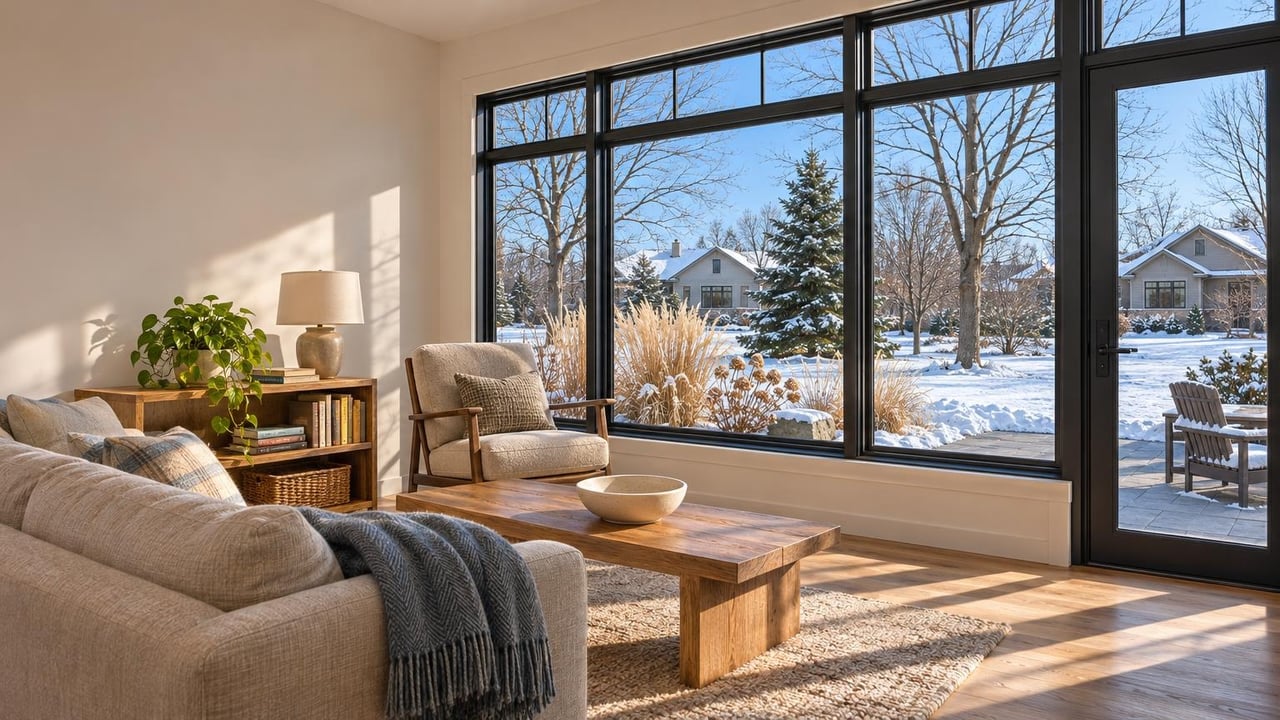
A winter listing works best for a home that photographs well in winter light and does not need green lawns to show its value. It also suits a seller who can respond quickly in December, before the slower January and February stretch. The longer days-on-market figures from January and February are a reason to have the presentation ready on the first day, not to start improving it after the listing goes live.
A spring listing suits a home whose best features are outdoors, such as a large lot, landscaping or views. The county's higher medians from March through August are the reward. The cost is a market with more listings, slower sales than a year ago and more new Howard subdivision land in the pipeline. Our earlier post on pricing upper-tier Howard homes covers the pricing side of that decision. Current inventory is on our Howard homes for sale page.
Frequently Asked Questions
Do these figures describe Howard specifically? No. They are Brown County residential figures from the Wisconsin REALTORS Association's monthly reports. Howard is one part of the county, and a comparable-sales analysis for your own neighborhood should check them against the village.
Is the winter price discount specific to Brown County? The 5.9% winter discount and 6.4% summer premium are WRA estimates for Wisconsin as a whole, covering January 2005 through December 2025.
What changed most between this fall and last fall? Mortgage rates. The statewide average 30-year fixed rate was 7.33% in October 2026, compared with 6.25% in October 2025. Brown County's October sales count did not change, while average days on market rose from 60 to 66.
Sandra Ranck Real Estate Collective prepares Howard listings for either season with professional photography, complimentary staging and printed property booklets. If you are weighing the calendar, start with a complimentary home valuation or schedule a luxury listing consultation, and we will look at where your home stands against both the winter market and the spring one.